Hello! My name is Boar. I'm a silly furry artist with an interest on
body horror, science and worldbuilding!
I'm studying immunology and micriobiology in college, science is my main inspiration for my ocs.
The ARGOVERSE is a passion project of mine; it reimagines our current world being populated by anthropomorphic animals with a speculative biological twist.The ARGONAUT is the lore revolving my ocs inserted in the universe.
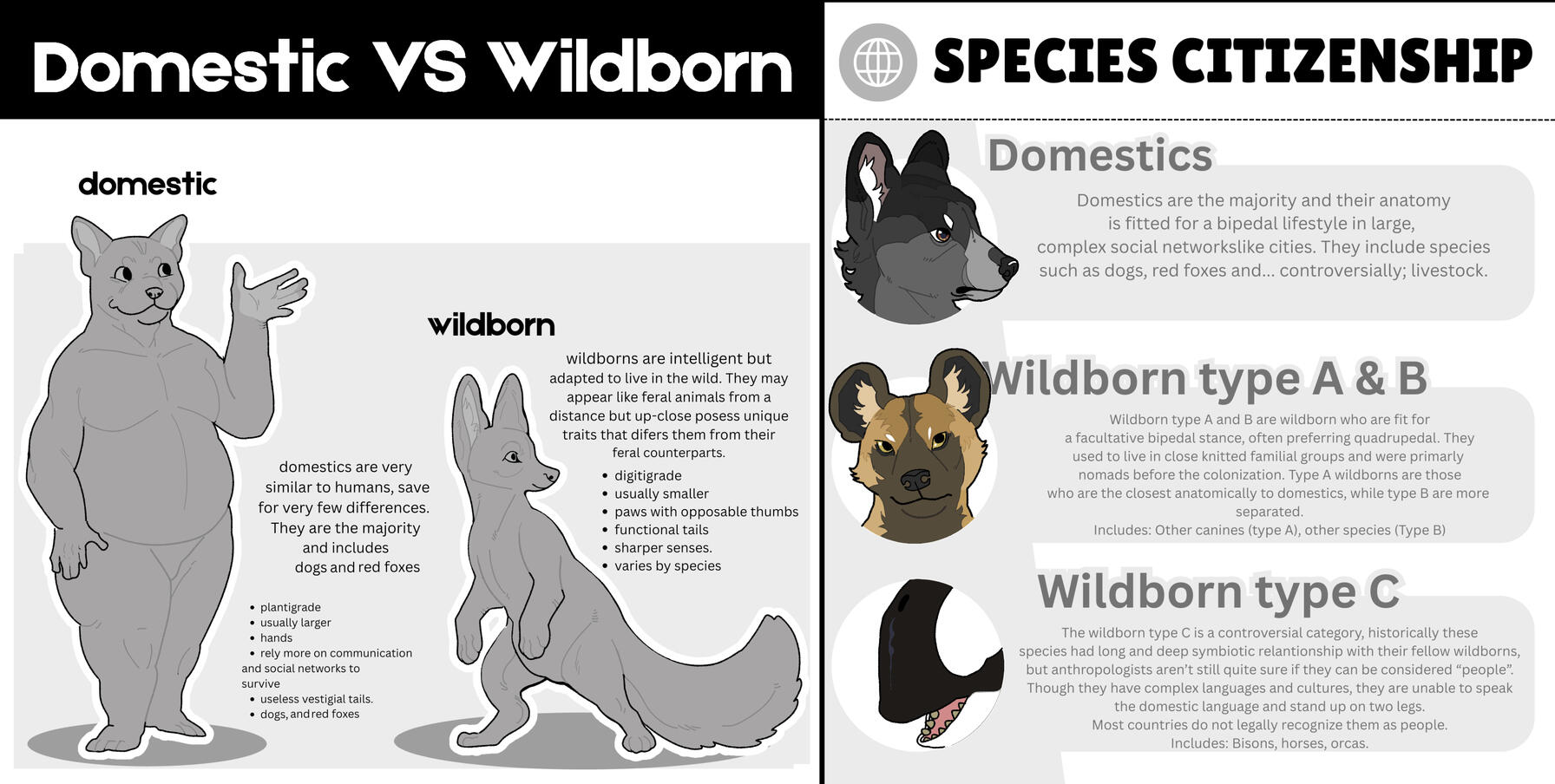
The Argoverse is set in the real world, populated by two groups called the 'domestics' and the 'wildborn'.Domestics are the majority with dogs being the larger portion.
wildborns will represent a very small fraction of the world population and are usually associated with traditional and native communities.Domestics have colonized those species and forced them into modern society, colonization involved a proccess called 'edenification', where invasive species of plants and animals were brought from Europe. It was believed that they could recreate European weather by terraforming the land.
In wildborns, most of their numbers are made up by Type A's. Not all animals in the argoverse are anthros, the catch-all term for both is 'tamed', feral animals are simply called animals. Animals that exist in the Argoverse involve every species that showed up in any artwork so far, animals that do not exist as anthros in the argoverse are amphibians, felines (with an exception of whispering lynxes), bats and reptiles, the latter two being extinct species.Extinct animals such as thylacines, atlas lions, dodos, etc did exist in the argoverse but were not anthros.
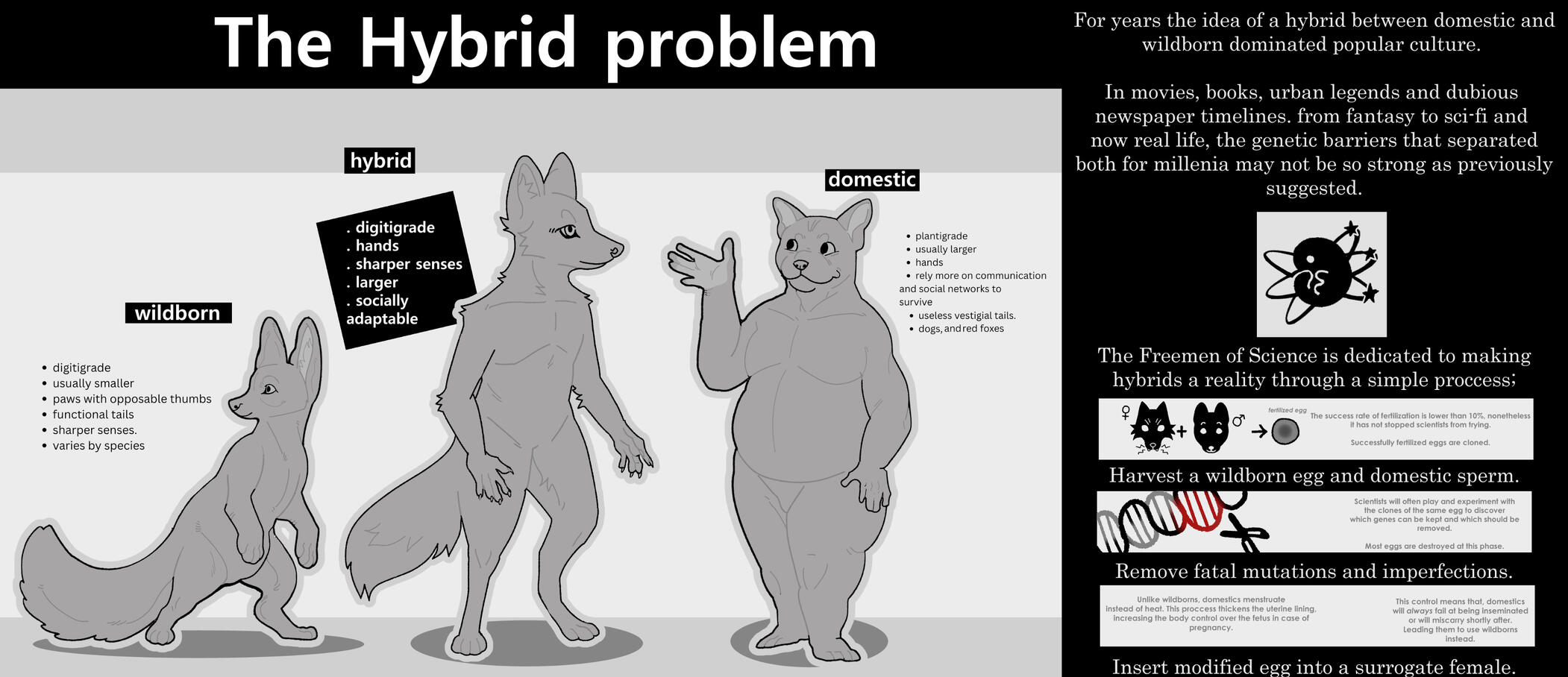
Most of the lore in the Argoverse involves a company called The Freemen of Science. This is where you'll see most of the characters and comics around, one of their main goals is trying to create a cross between domestics and wildborns.These groups cannot naturally conceive and are in different families, in fact, even between domestic species reproduction is impossible.
The Freemen however, are dedicated to creating hybrids for the goal of... science, of course! So far, the most probable hybrids are between Red foxes and wildborn foxes (arctic, desert, praire, etc), although 'Red fox' is a misnomer and they aren't actually all that related to foxes.
Domestic dogs are however the main choosen targets, simply due to their numbers, the marketability of hybrids is also a huge factor.
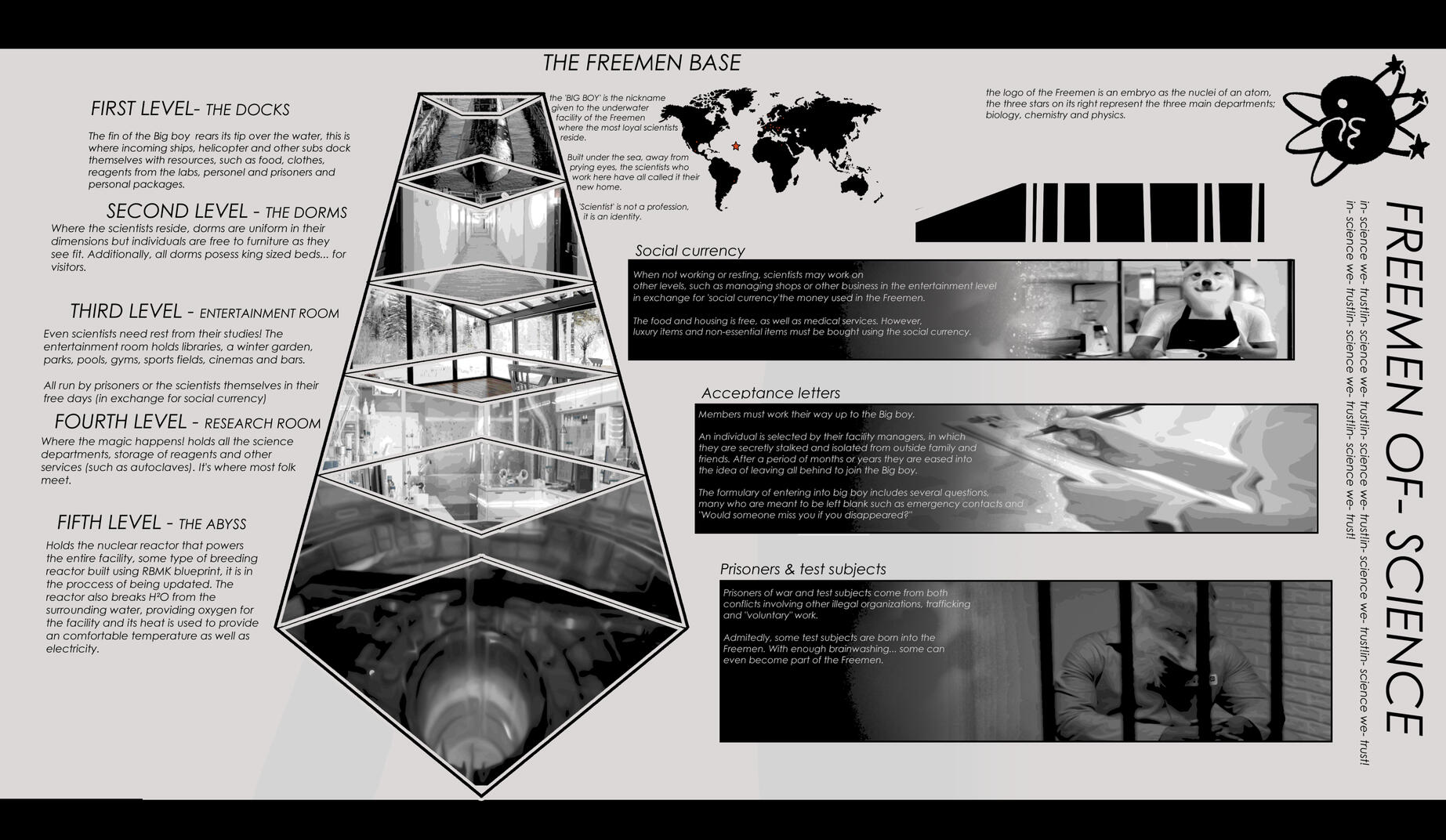
The Freemen of science - our main... protagonists, are a terrorist group that houses exiled, blacklisted or even mediocre scientists and science enthusiasts. They play god and break all sorts of moral and ethical rules... and the law, of course.The Freemen do all sort of services, sometimes for other criminal groups, sometimes even for other goverments and companies... those services include from repair of military vehicles to developing new drugs, creating new (bioweapons), engineering military weapons, alternative medicines, etc.Their existence is kind of an open secret; everyone knows about them and everyone knows they found a cure for cancer 3 times and auctioned it to pharmaceutical companies for billions 3 times.
Although the Freemen bunkers/research facilities are spread through the world, one main facility is known to be the largest; The Leviathan's rest or affectionately known as the 'Big boy'.The Big boy is a massive underwater base, housing around 15k members of the Freemen permanently, those who live on the Big boy are the elite of the company or its most vulnerable members. As soon as you get on the Big boy, there is no going back, former assets are sold, identities are stripped and your death will be faked to family. Escape is impossible and deserters are sentenced to death, though the ones who have come this far are so brainwashed none of them would ever dare to think of it.
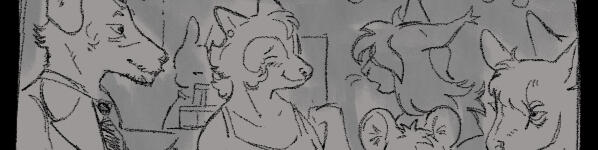
The characters
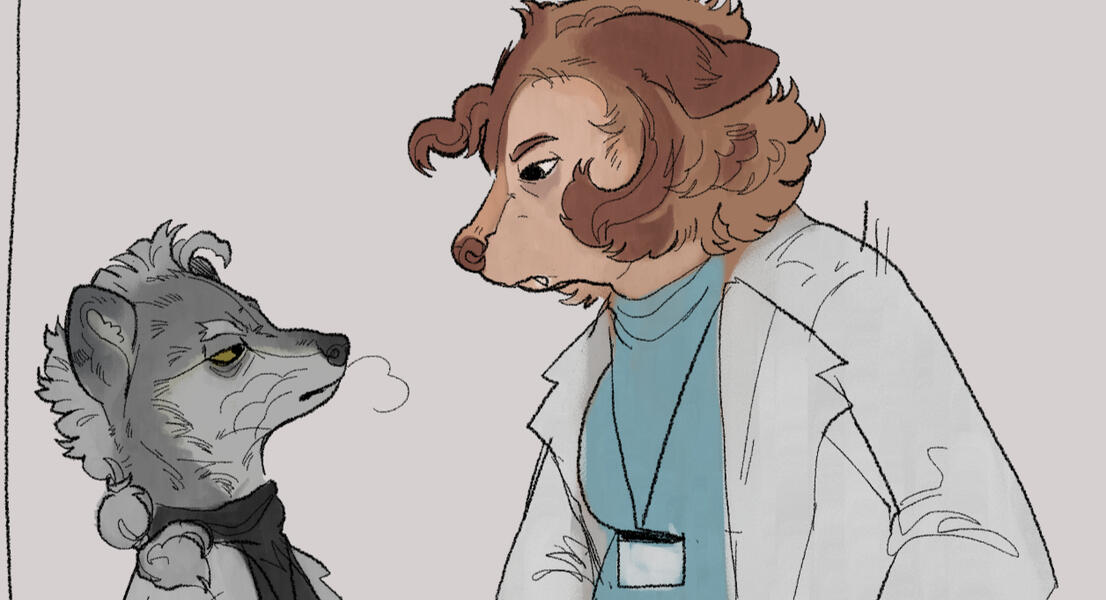
The main two characters I mostly draw in the Argoverse are Valérie Pasteur, a french geneticist domestic, and Ashanov (or Freyja,), a Franco-Russian xenobiologist/biowarfare especialist wildborn.Ash, is married to another woman but is a serial cheater. Valérie is one of her lovers that she likes the most, both of them having dating before in their 20s and being reunited at their 40s after a brutal series of events.They are not the main characters, others you might see;
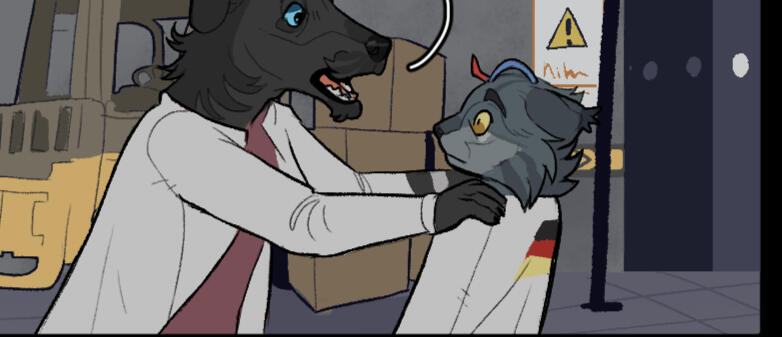
Olivier Hahns, the only feline in the cast and possibly of all my planned comics. Olivier is wrecked by nervousness and OCD, the only thing that brings him comfort are nuclear reactors. He moved to the Freemen as the sole manager of it's nuclear powerplant when Germany made the decision to shut down their own. He's friends with Ihor Ky'tska, an Ukranian medical doctor and quantum physicist who has a terrible nasty habit of switching places with other versions of himself from alternative timelines. (An condition caused by a faulty time machine.)
The Argoverse
The Argonaut
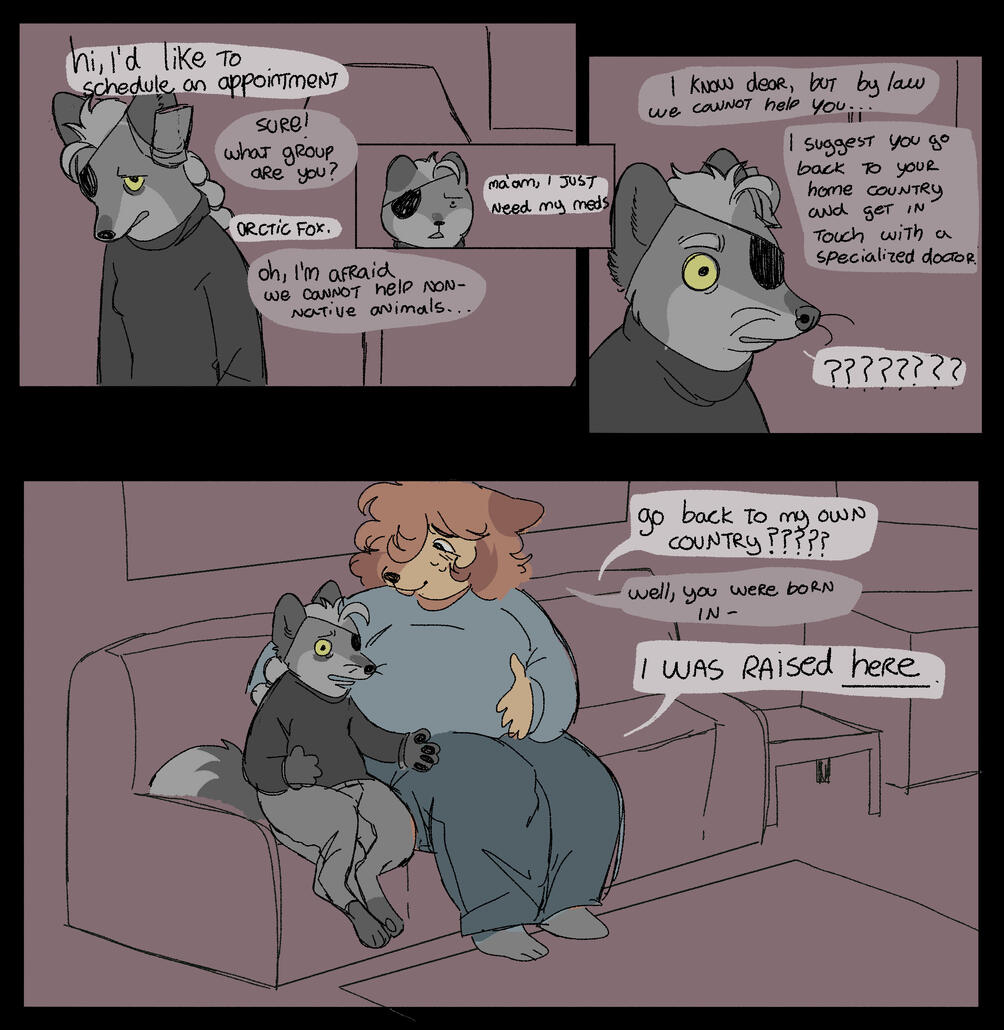
Endemy is a concept/phenomenon that some species are biologically tied to their national identities. Most sapient species on the planet have specialized into niches in their regions which naturally deters the migration of certain groups, ie; a fennec fox living in the arctic or a polar bear in the tropics.Wildborn are more susceptible to environmental changes than their domestic counterparts (although some domestic breeds may also be at risk). From humidity, temperature, light, seasonal differences, wind and weather, most wildborn are put into extreme stress when removed from their own regions.Other factors include; access to food relevant to their diets, medical attention and diseases. The current system focuses on providing food for the domestics, the majority, while smaller wildborn-focused supermarkets do exist, they are community efforts that focus on the local wildborn population, causing outside wildborns who are visiting to suffer.Other regions may also have circulating organisms in the local population that can pose a threat to newcomers (or vice-versa), the medical staff is also focused on treating the local wildborn population.
Colonization of other regions by domestics was followed by an attempt to ‘terraform’ new land to suit the needs of the colonizers. Domestic dogs at the time referred to this as “creating the new garden of Eden.” As a result, not only the local indigenous population suffered but many invasive species of plants and other feral animals were also introduced in an attempt to replicate Europe’s weather.In modern day, there is much debate around the idea that some species can be ‘biologically American’ as some individuals may put it. It is true that some species are endemic to certain countries and this has served to strengthen nationalist feelings, on the other hand, this is another way to erase and remove indigenous groups who existed in the land and are struggling to compete agaisnt invasive species.Extremely adapted species such as arctic and desert species are one of the most vulnerable groups due to their sensitivity to environmental change, other animals who choose to immigrate will see challenges (such as housing and public spaces not being accessible to their builds) alongside the ones previously mentioned.
The art archive contains illustrated examples of all information mentioned here, it's recommended you take a look at it afterwards!
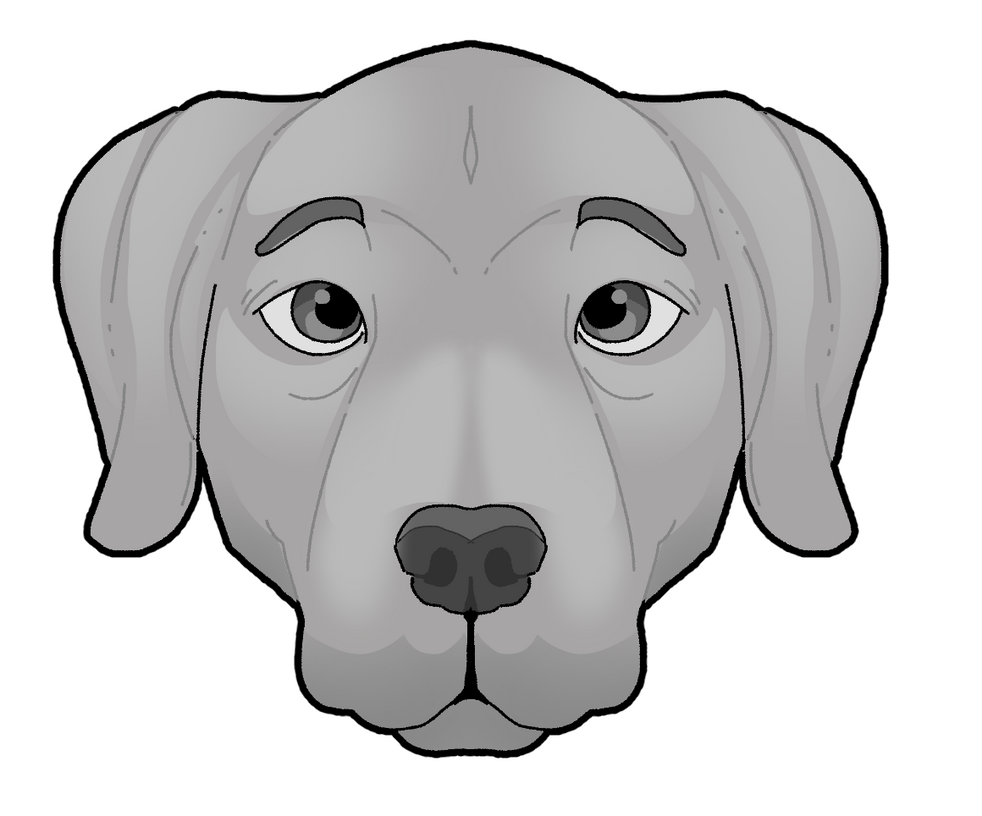
DomesticsDomestics will have the same or similar senses to us humans, as well as biology and anatomy. Their eyesight, smell, hearing, taste, metabolism, anatomy and biology is comparable to ours with an exception of livestock.Historically, dogs were believed to be made in the image of God while Red foxes were an repulsive imitation which led to them being excluded from their societies. For the most part, Red foxes did not have their own cities, culture or languages and lived near dogs.
WildbornsWildborns senses vary from species to species, but it's understood that their survival skills are far more advanced than domestics.An interesting part of this, is that most wildborns species rely more on smell than vision and consequently, many traditional wildborn languages included strong smells to send a message.Smell, is how most wildborn identify other's gender, age, health, and species. Some domestics may feel uncomfortable with wildborn being able to smell sensible information such as a sickness or a pregnancy, and in many situations, wildborns may know before the person themself.Hearing is also strongly favoured over vision. With hearing so sensitive some may congregate in places without electricity or flourescent lights as the sound of running energy may be too loud for them.Although vision was least favoured here, don't let yourself be fooled. Wildborns may see less colors but they are able to see longer distances and more shades than domestics.Each species will have their own senses and adaptations, as a general information page, I have only slightly brushed the surface.
Unlike domestics, wildborns cannot sustain a bipedal stance for too long. During the colonial era, they were forced to remain on two feet by force or have surgeries to 'repair the spine'. Many would opt to use braces, a corset-like undergarment that forced the spine to adopt a straight posture.